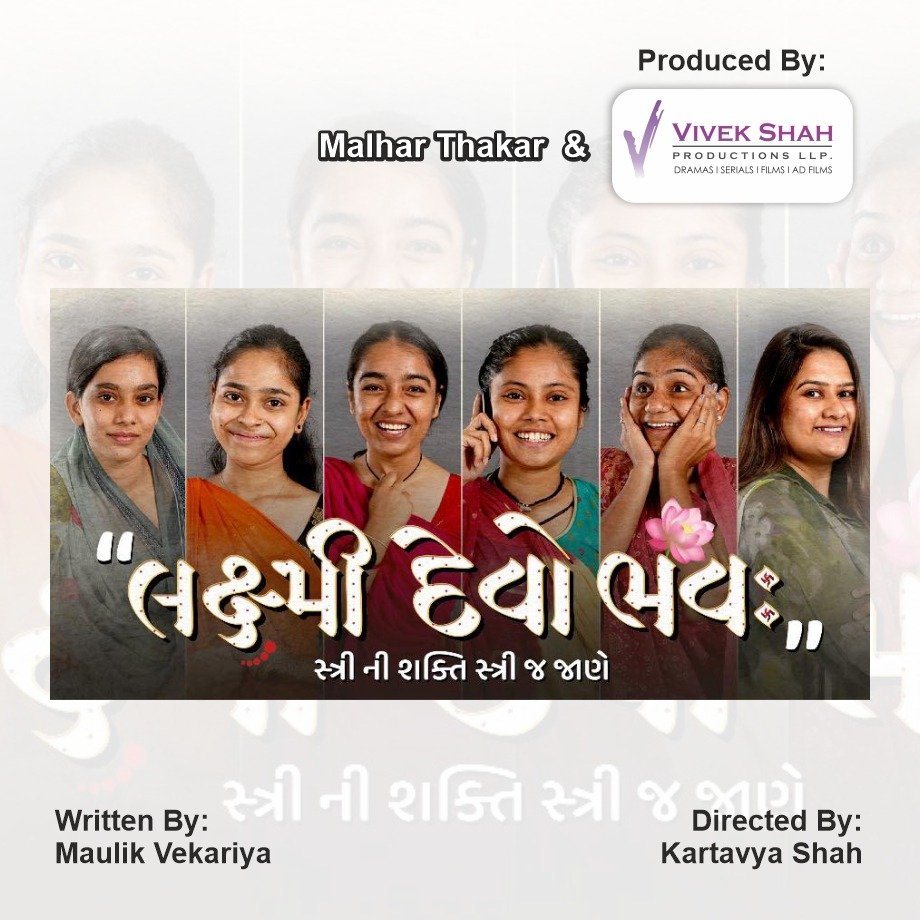
This story revolves around four houses in a small ‘dela’ (a type of traditional cluster housing) in a low-lying area of Ahmedabad, and the people living nearby. The four main characters (Kesar, Manju, Vijli, and Champa) receive compensation money after losing their husbands. With this money, a bank officer named Kranti teaches them how to live their dreams. They are in the process of transforming their skills into income, setting an example for society to follow. However, due to their husbands’ outstanding debts not being paid on time, Motabhai Desai brings these four women’s lives crashing down from the sky to the ground. But these women do not lower their eyes in the face of Desai’s threats, which escalates the conflict, severely injuring Motabhai’s men, and leading to the arrest of all four women by the police.
After being released from police custody, Champa Ba, Vijli Ben, Manju Masi, and Kesar Kaki establish a new reputation in the slums of Ahmedabad. Kranti also starts working with them. Together, they resolve all the problems of the entire ‘chol’ (a housing cluster), and people start coming to Champa Ba’s ‘darbar’ with small and large complaints. This established the dominance of all four, along with Champa Ba. Bhaskar and many others join them. The enmity with Motabhai continues.
The four women changed not only their own lives but also the lives of the ‘chal’ and its people. Bhaskar wants to marry Kranti, but Kranti dislikes marriage. Here, the four women collectively change Kranti’s hatred into love and make her understand how necessary a man’s life is in a woman’s life. When you have everything in the world, but no shoulder to lean on to ease the weariness of your heart and the burden of your mind, then all your earnings are dust. When they had everything but their husbands, they considered remarrying. Kranti understands this, and Kranti and Bhaskar get married. And the four women remain the queens of that ‘chal’ forever.
“The story of becoming a Nawab from a servant will blossom when a dream sprouts in a stone.”

Maulik Vekariya
Writer

Kartaviya Shah
Director
Mansi Shah
Co-Producer
Varun Mehta(Ram)
Co-Producer

Vivek Shah
Producer

Malhar Thakar
Producer
Rinal Shah
Co-Producer